Contents
- What is my port number?
- TCP vs. UDP
- Why exercise you need to know your port number?
- How to observe your port number on Windows
- How to find your port number on Mac
- How to open a port on Windows x
- How to open a port on Mac
- Common port numbers
A port number is a way of identifying a specific application or procedure over a network. Every device connecting to the internet uses ports and then that different applications could establish connections simultaneously.
If you browse the web, download files and use a printer at the same fourth dimension, all these operations use different ports. For instance, File Transfer Protocol (FTP) data transfers apply port number 20 while HTTPS uses 443. There are 65,535 ports in total, but not all of them are available for regular users.
What is my port number?
While an IP address is attached to a device, port numbers are attributed to unlike processes and connections within that device. They are used to make these processes identifiable on the cyberspace and assistance the receiving end on the spider web to identify the operation and take the right activity. Check out our video on port numbers for a breakdown of their definition and function.

Port numbers are like extensions to your IP accost. For instance, your reckoner's IP address is 192.168.11.1, while the file transfer protocol (FTP) port number is twenty. Thus, the IP for an open up FTP port would be 192.168.eleven.1:20. By seeing this address, the server will "sympathize" your request.
Port numbers have dissimilar numbers and types. Every unlike activeness has its own port so that they tin all coexist nether the same IP address:
- Well-known ports (0 to 1023) are used by major companies similar Apple or MSN for their services;
- Registered ports (1024 to 49151) can exist assigned to specific services by asking;
- Dynamic or private ports (49152 to 65536) tin can exist used by anybody for private servers and temporary purposes.
TCP vs. UDP
Port numbers take different numbers and types. Every different activeness has its own port then that they tin can all coexist under the same IP address:
- TCP is more reliable as information technology always must establish endpoints between sending and receiving locations for the connexion to happen. Information technology guarantees that packets of data will e'er reach the addressee. It likewise tracks data to make sure it isn't lost, meaning that the data arrives securely and in order. This protocol is used for web browsing or email applications;
- UDP is faster but less reliable as information technology does non require an established connectedness. Information technology also allows data to exist sent in the wrong order. It doesn't check information as thoroughly every bit TCP, then it is more than lightweight and quicker. It is employed for operations where speed is an essential gene, like online gaming, video conferences, etc.
Why do you lot need to know your port number?
It allows you to have more command over your software. Considering applications use specific ports, they should always exist open for them to work properly. On the other manus, closing them can improve your security. If one of your apps tin can't connect to the cyberspace, you might want to check the relevant port and open up or shut it. Y'all can also open a port on your router and assign information technology to any device or program by using port forwarding.
Firewalls can cake some ports, so manually allowing them to featherbed firewalls may exist necessary.
How to find your port number on Windows
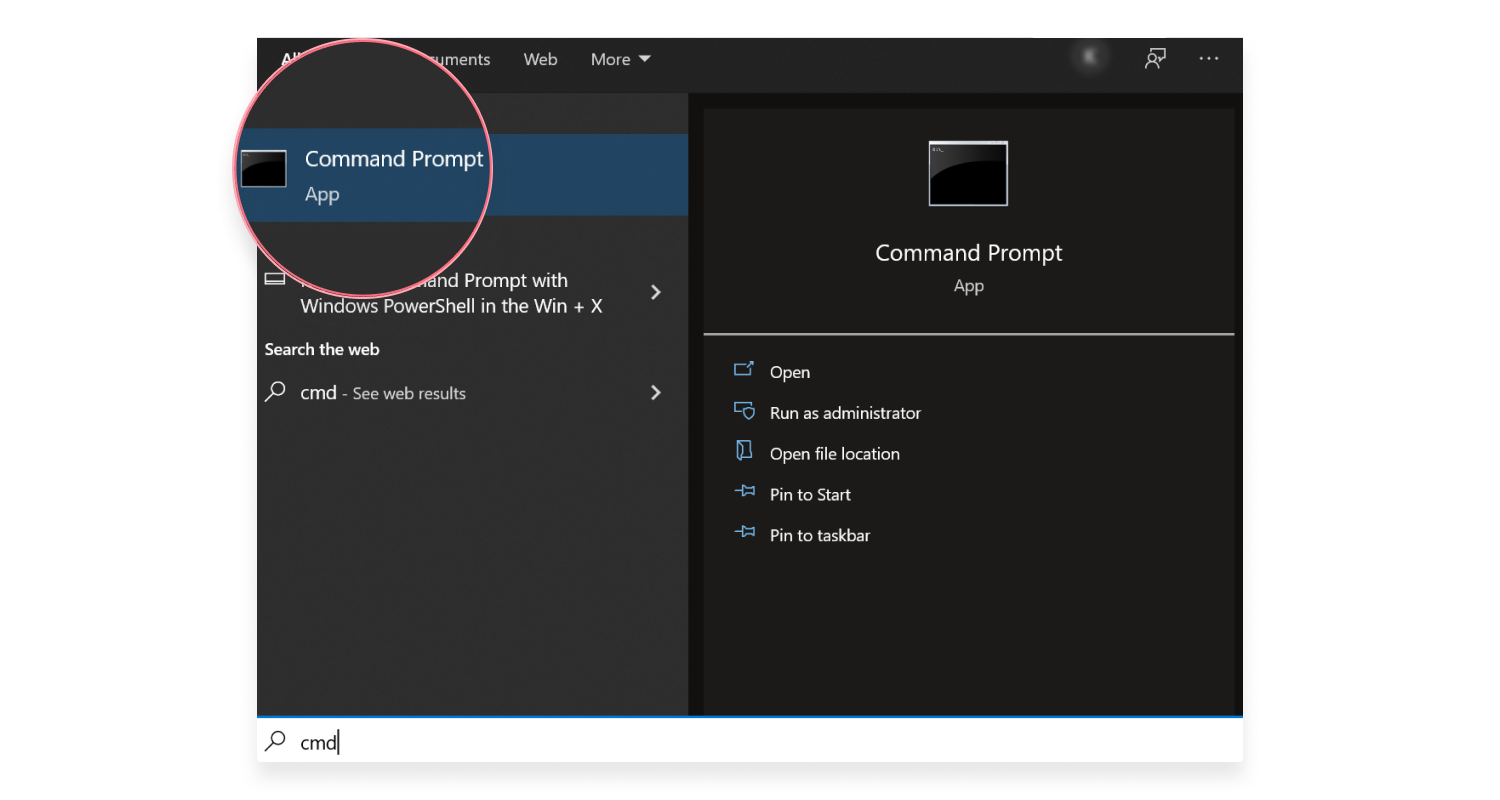
- Type "Cmd" in the search box.
- Open Control Prompt.
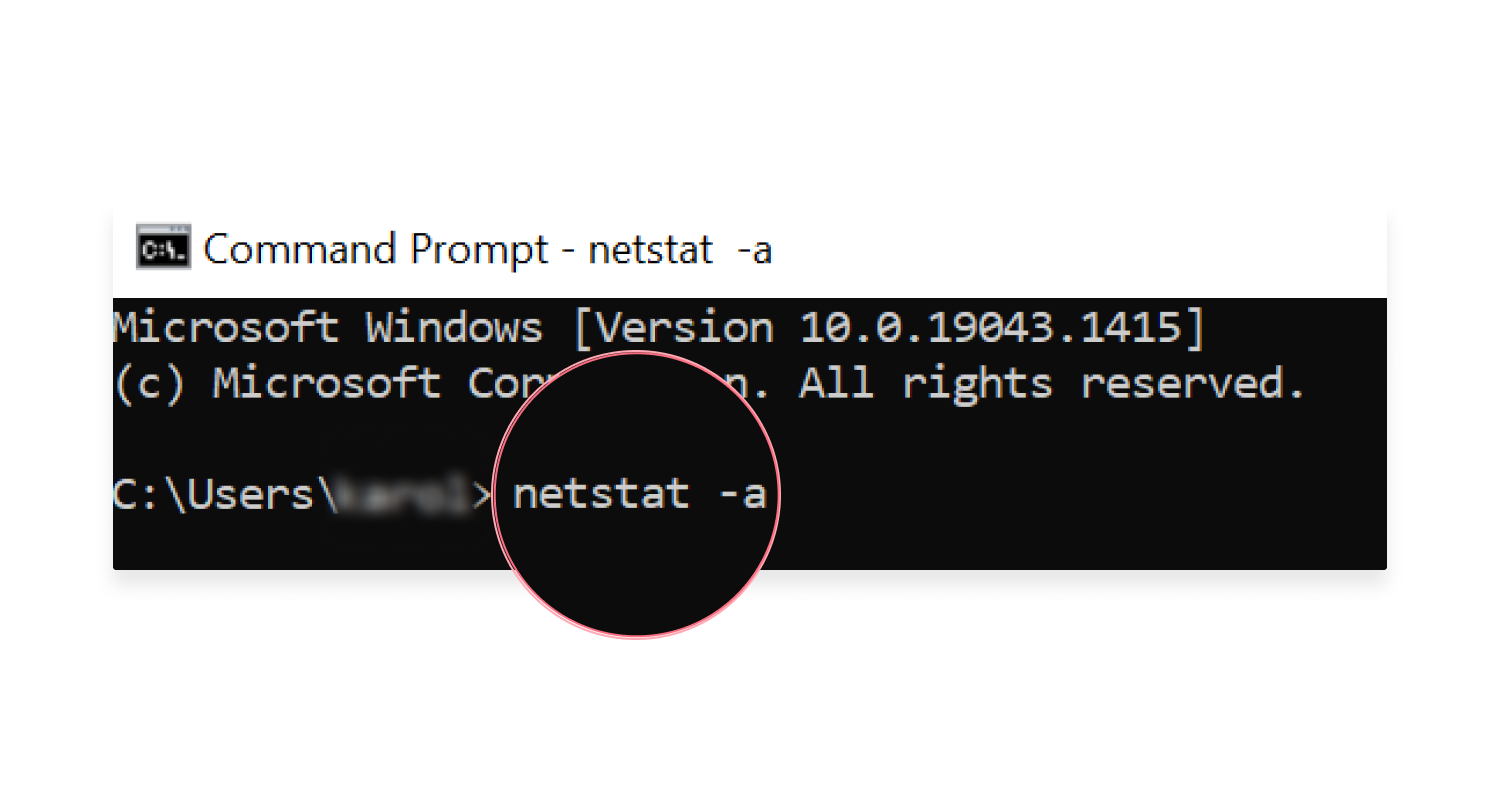
- Enter the netstat -a control to encounter your port numbers.
How to find your port number on Mac
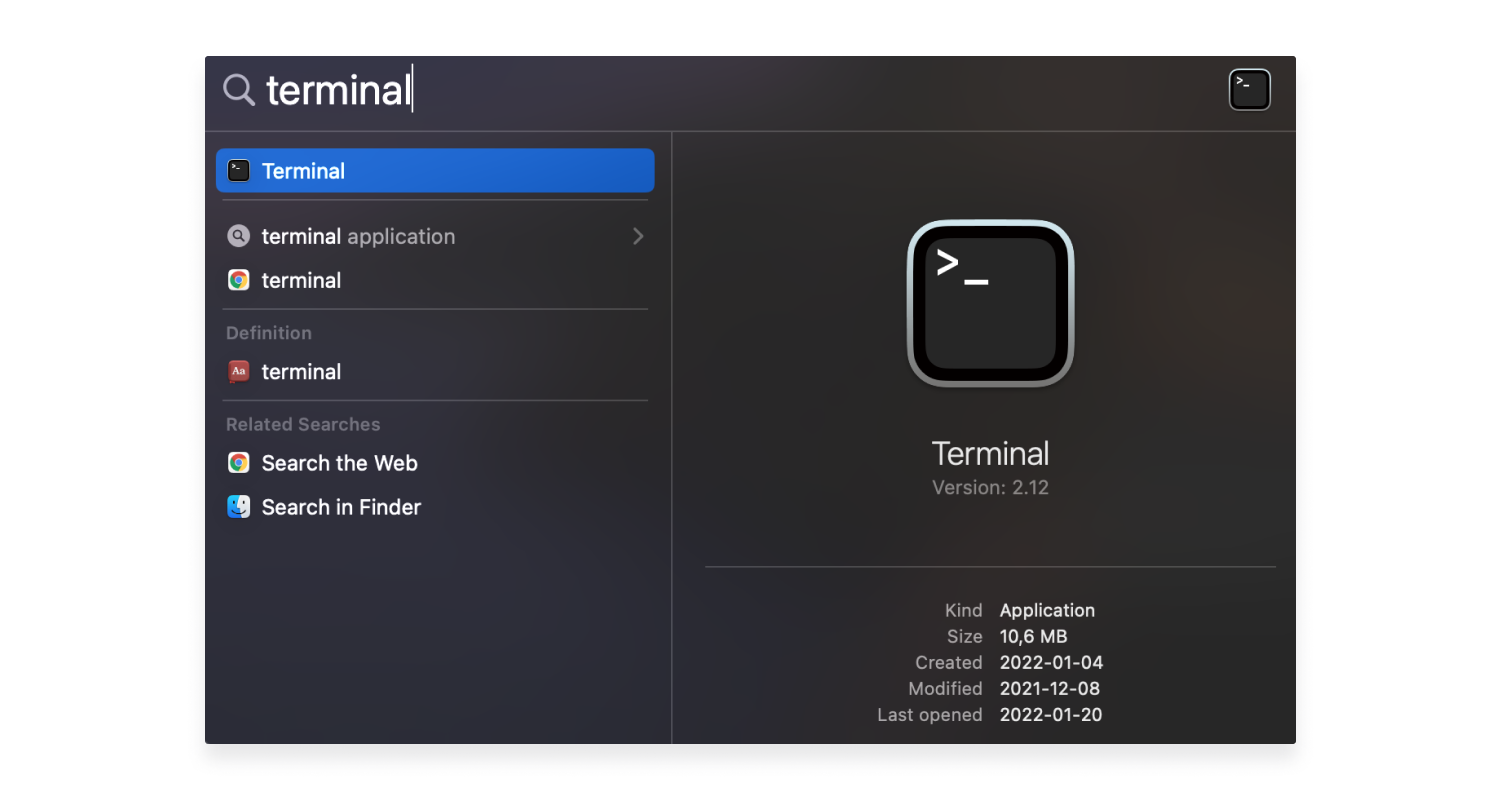
- Open Final.
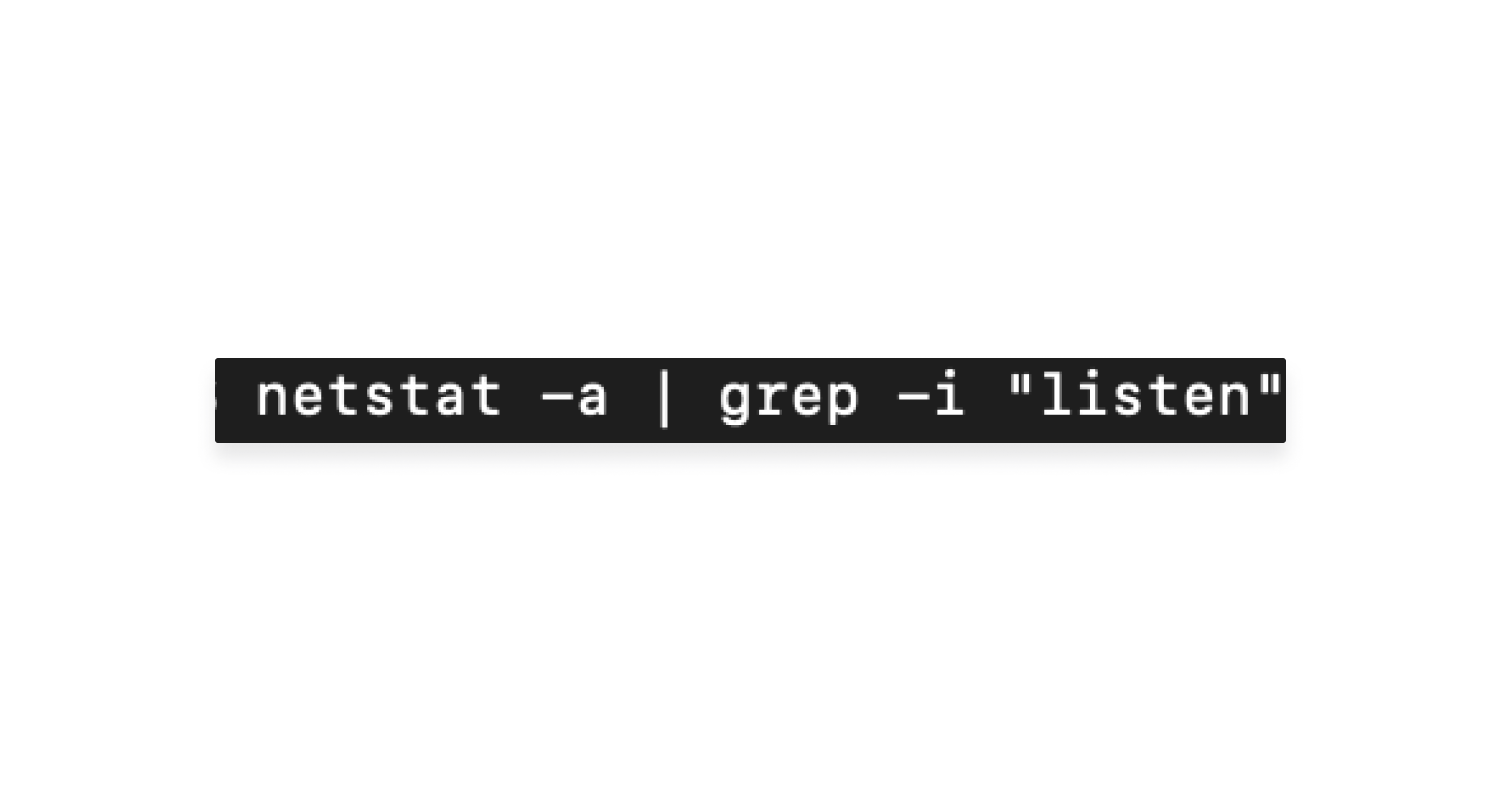
- Blazon the netstat -a | grep -i "listen" command and press Enter to run across the listing of opened ports.
How to open a port on Windows 10
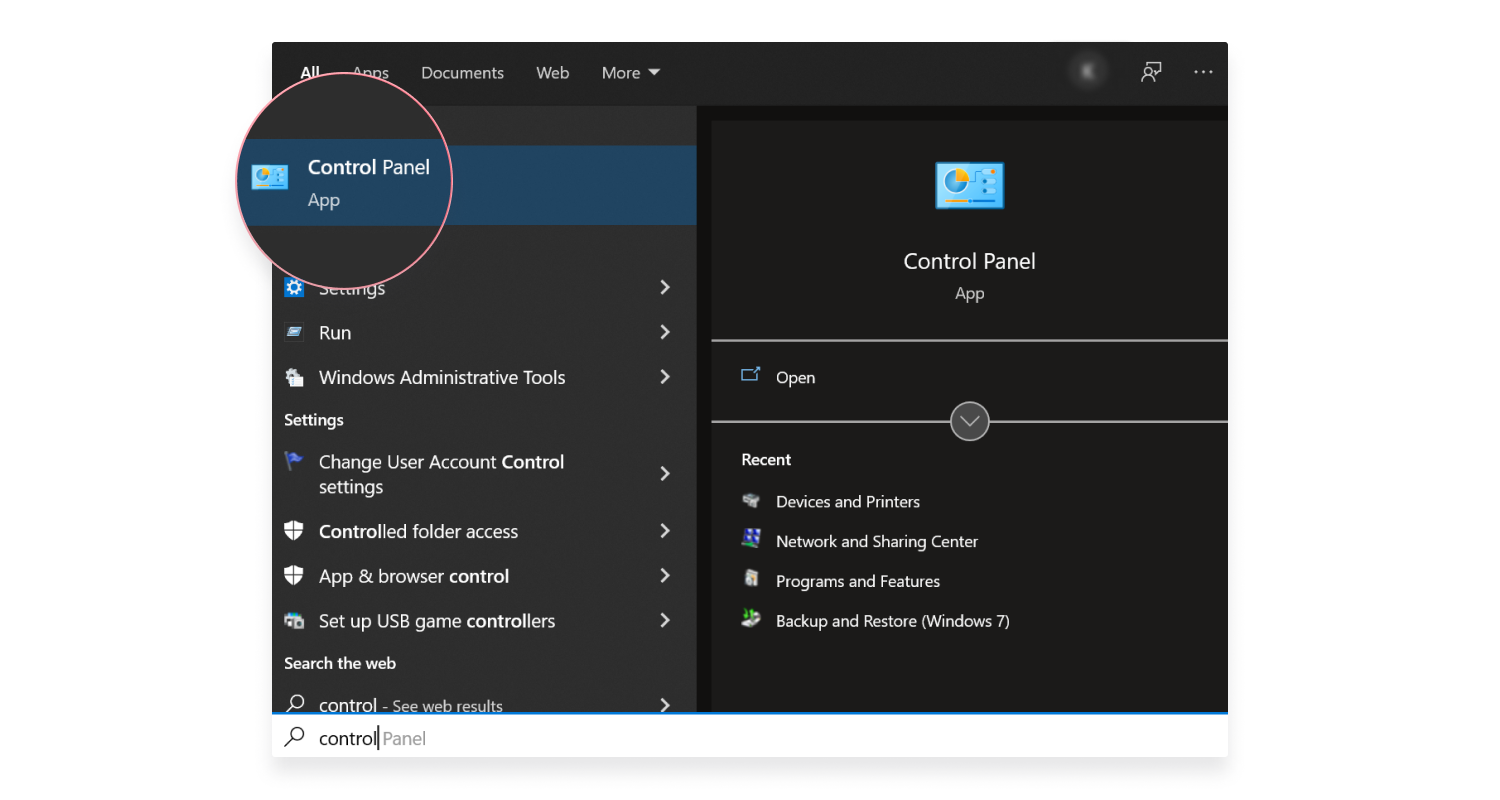
- Get to Control Console.
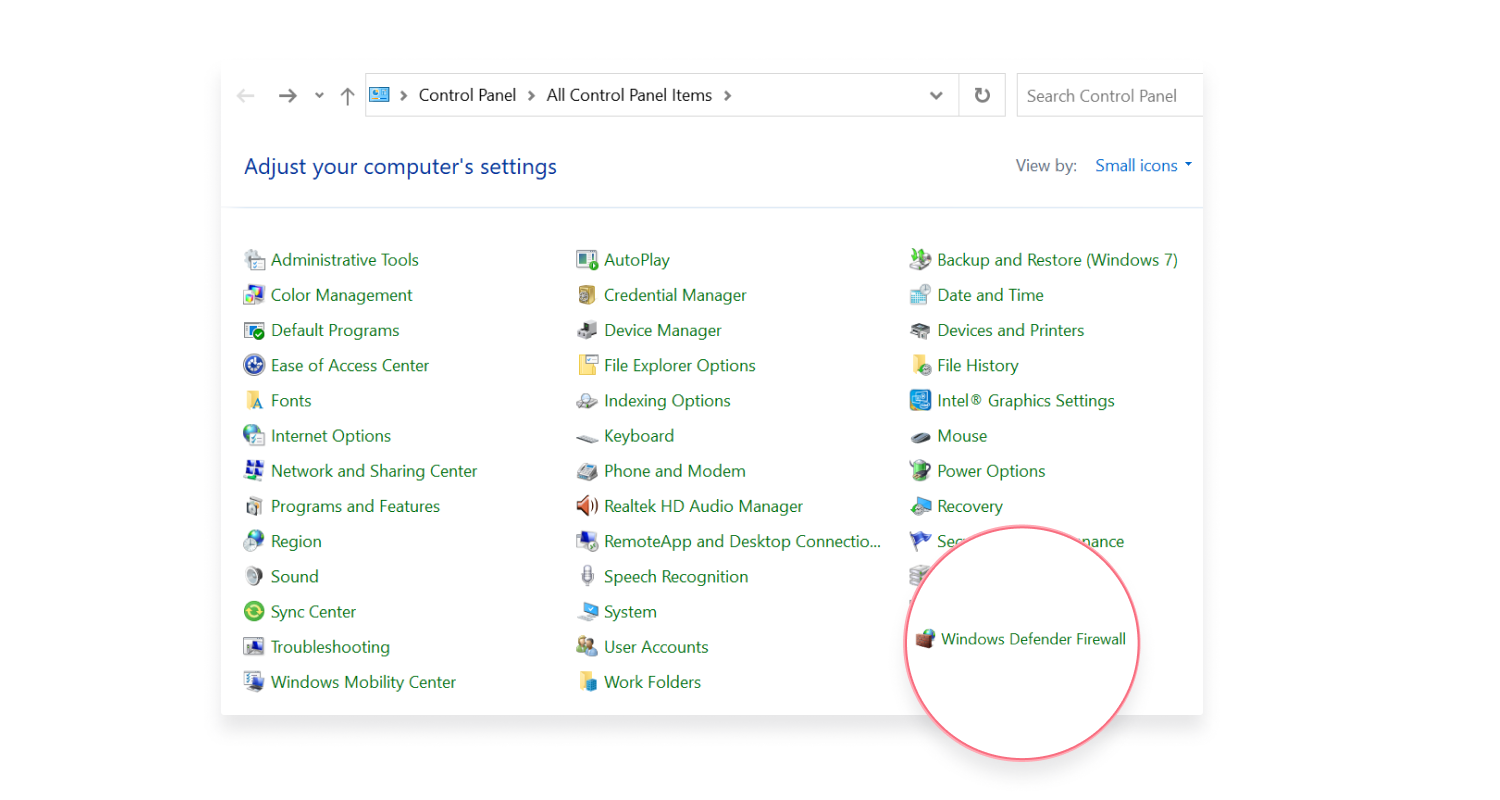
- Get to System and Security -> Windows Defender Firewall.
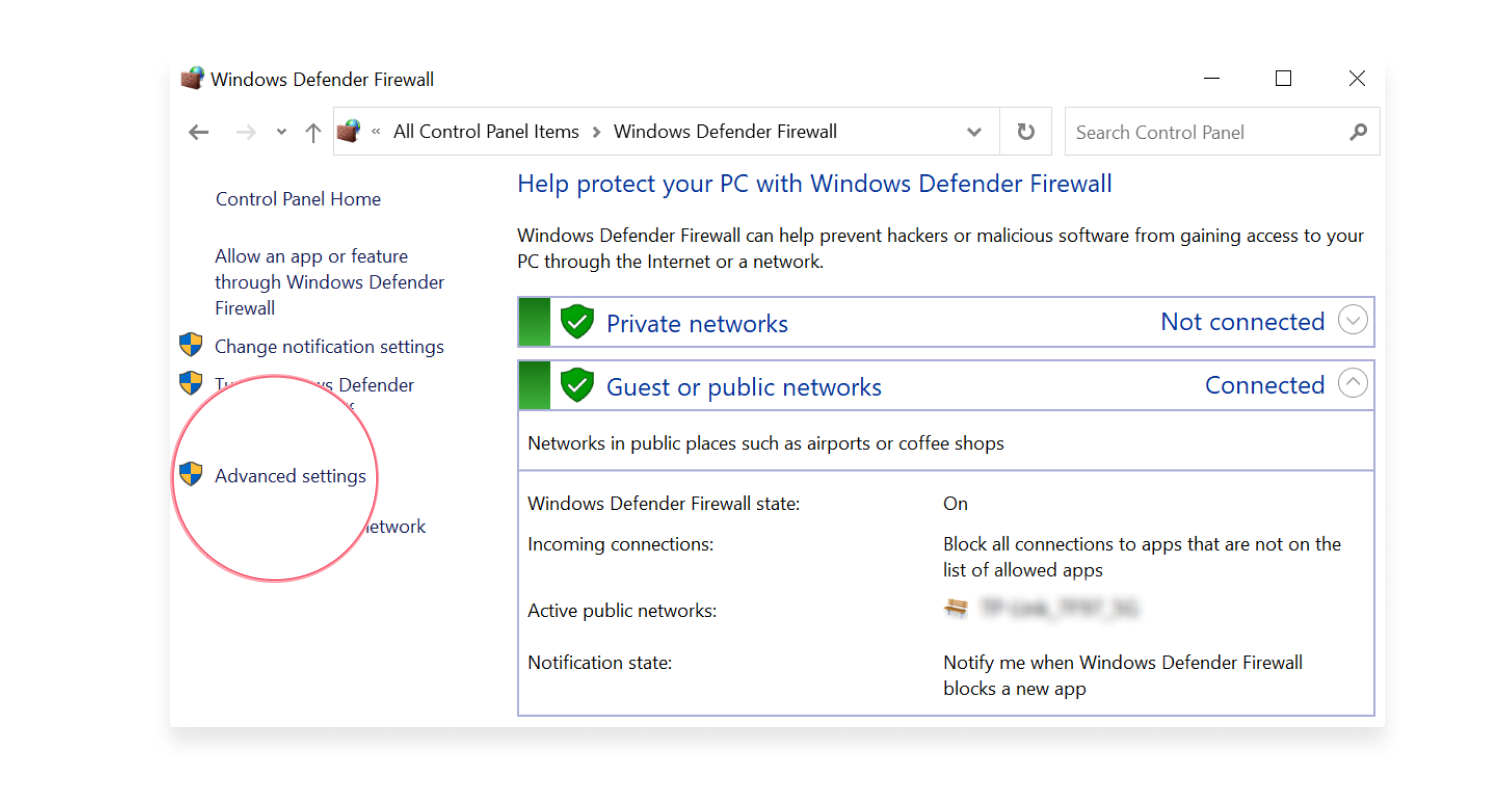
- Select Advanced settings.
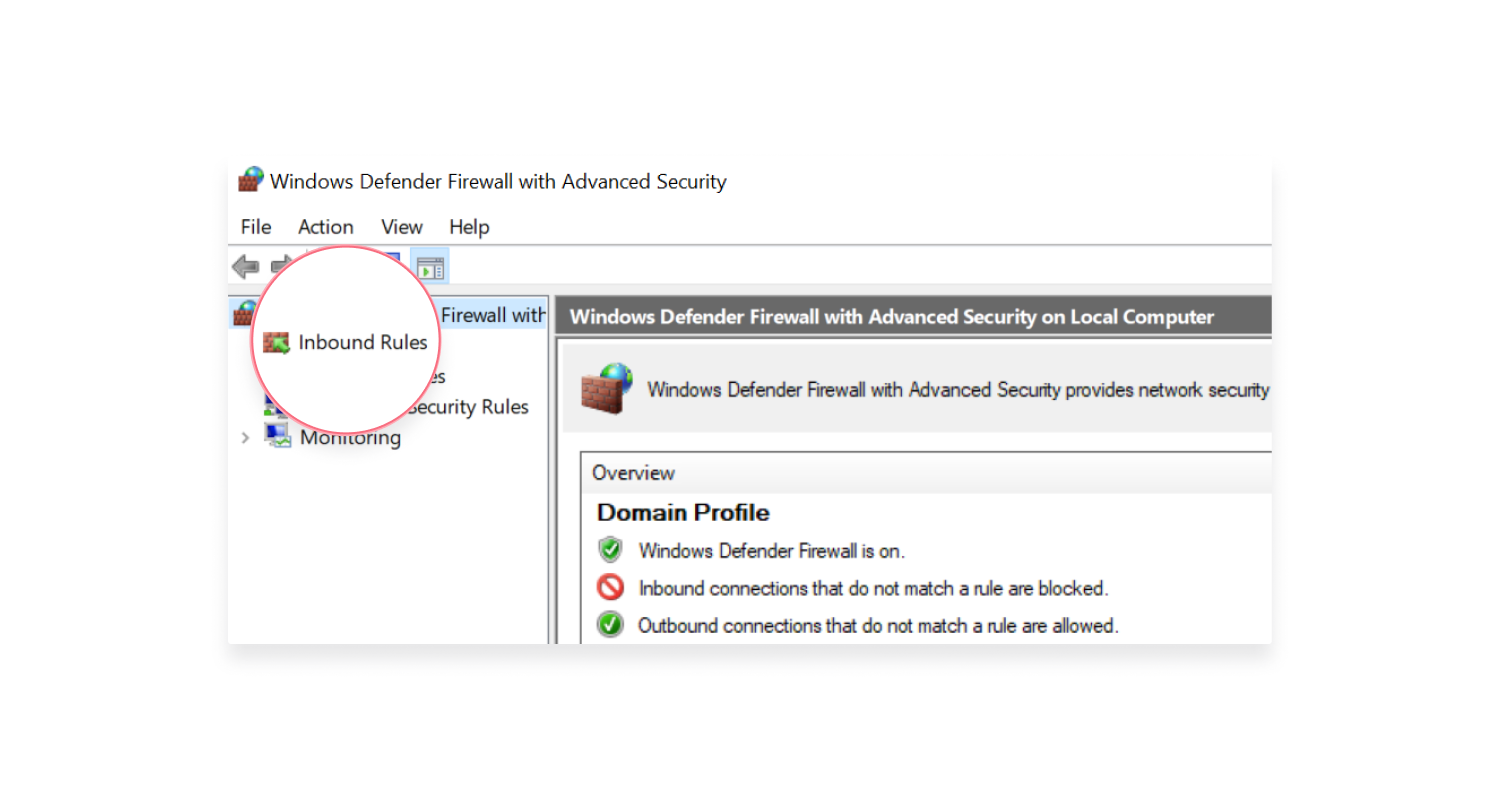
- Click on Inbound Rules on the left.
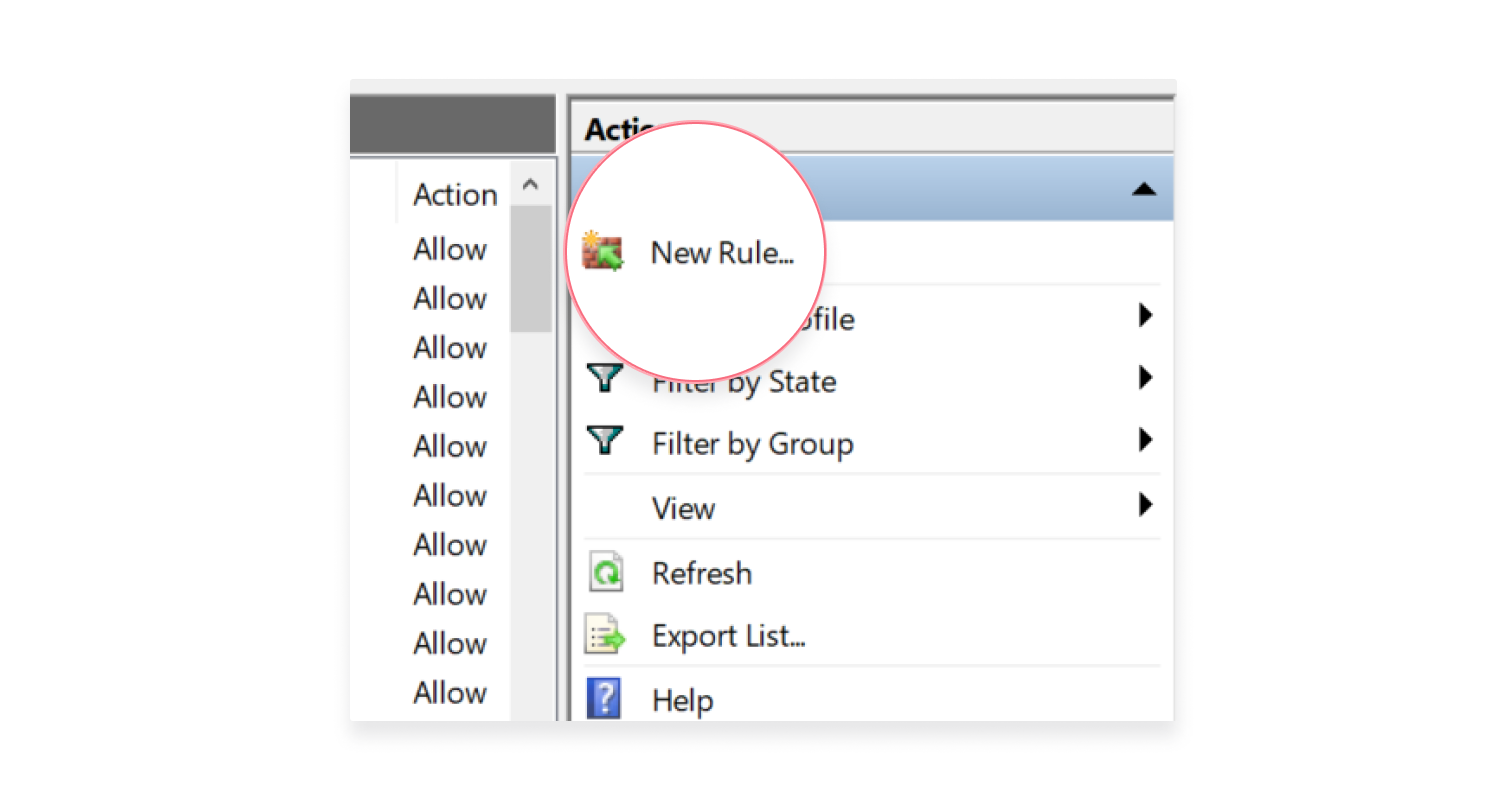
- Click on New Dominion on the right.
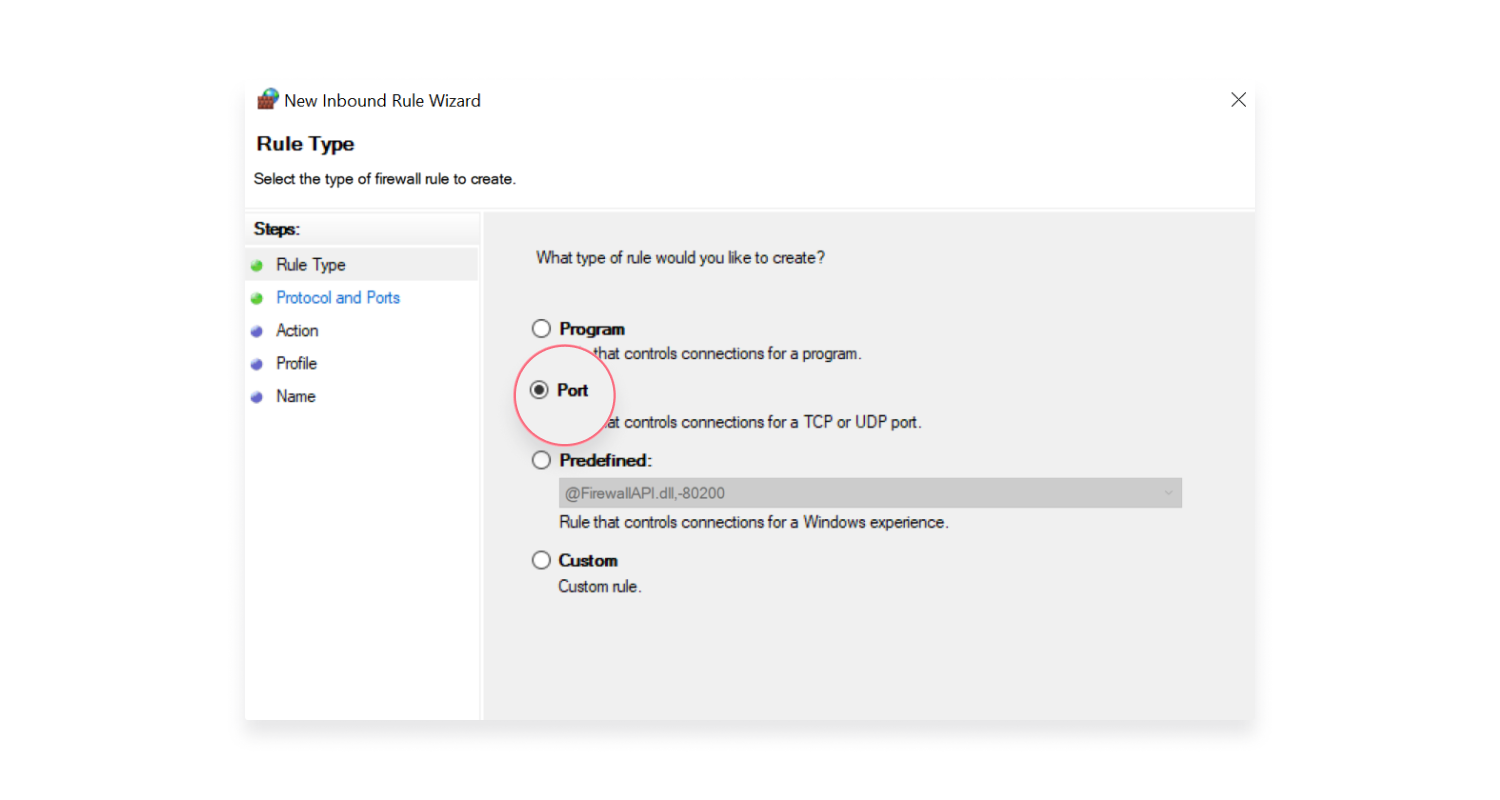
- Cull the Port selection.
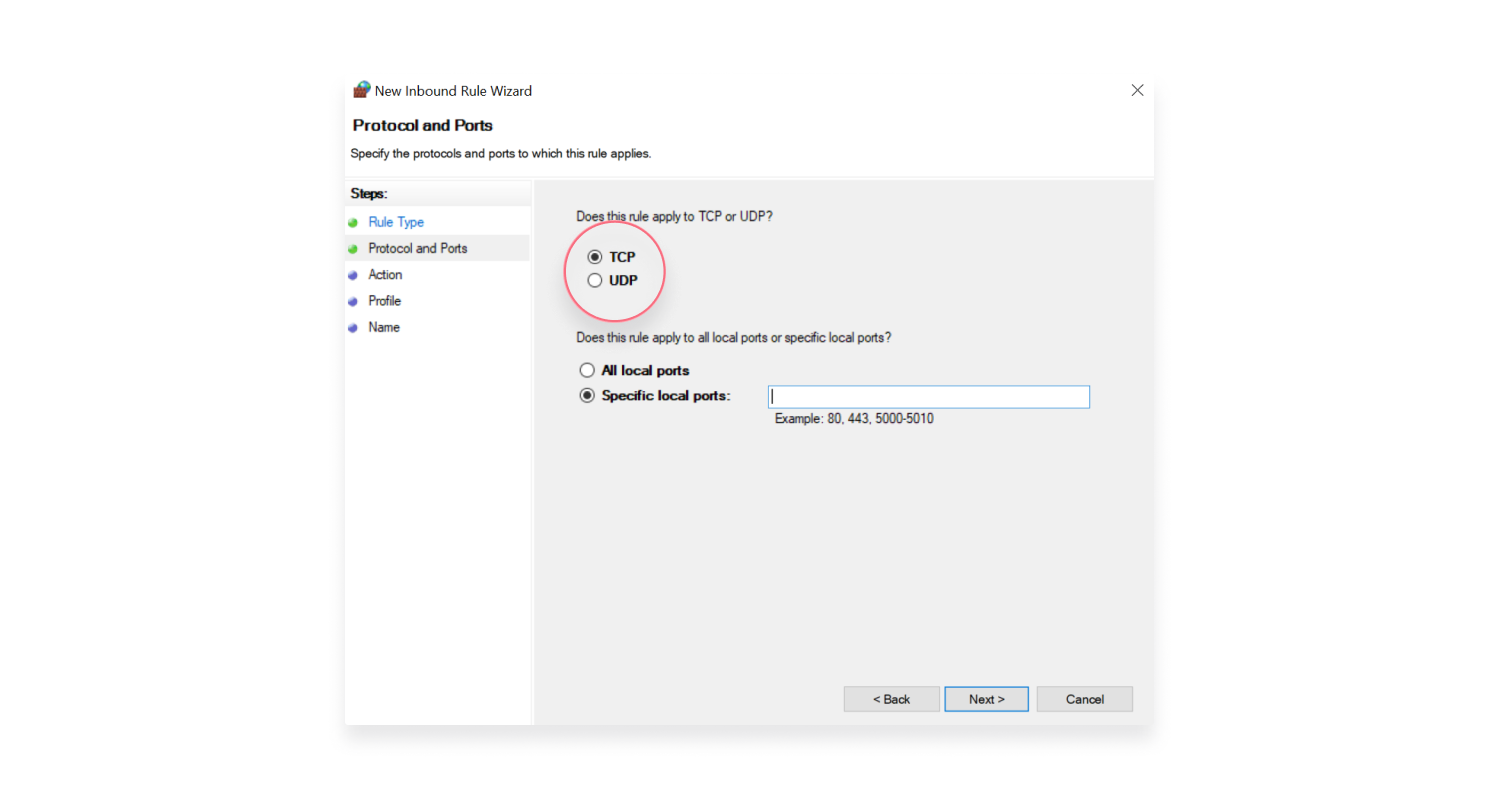
- Get to Protocol and Ports. Cull the protocol (TCP or UDP) and add together the port number into the Specific Local Ports section. You can find the list here.
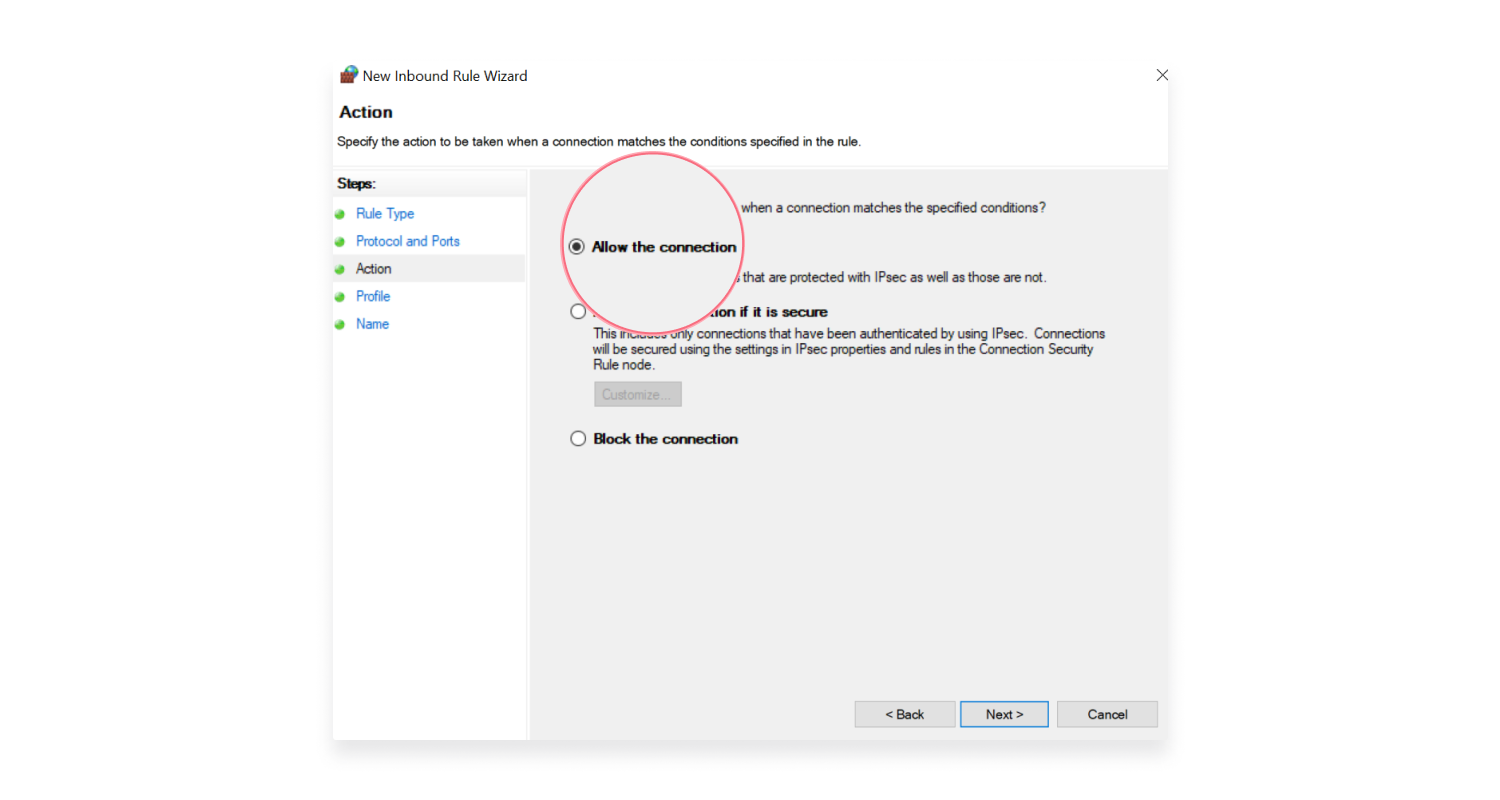
- Press Next and choose Permit the connection.
- Select what type of network this rule applies to and click Next.
- Add a proper name and brusk description to the rule and click Finish.
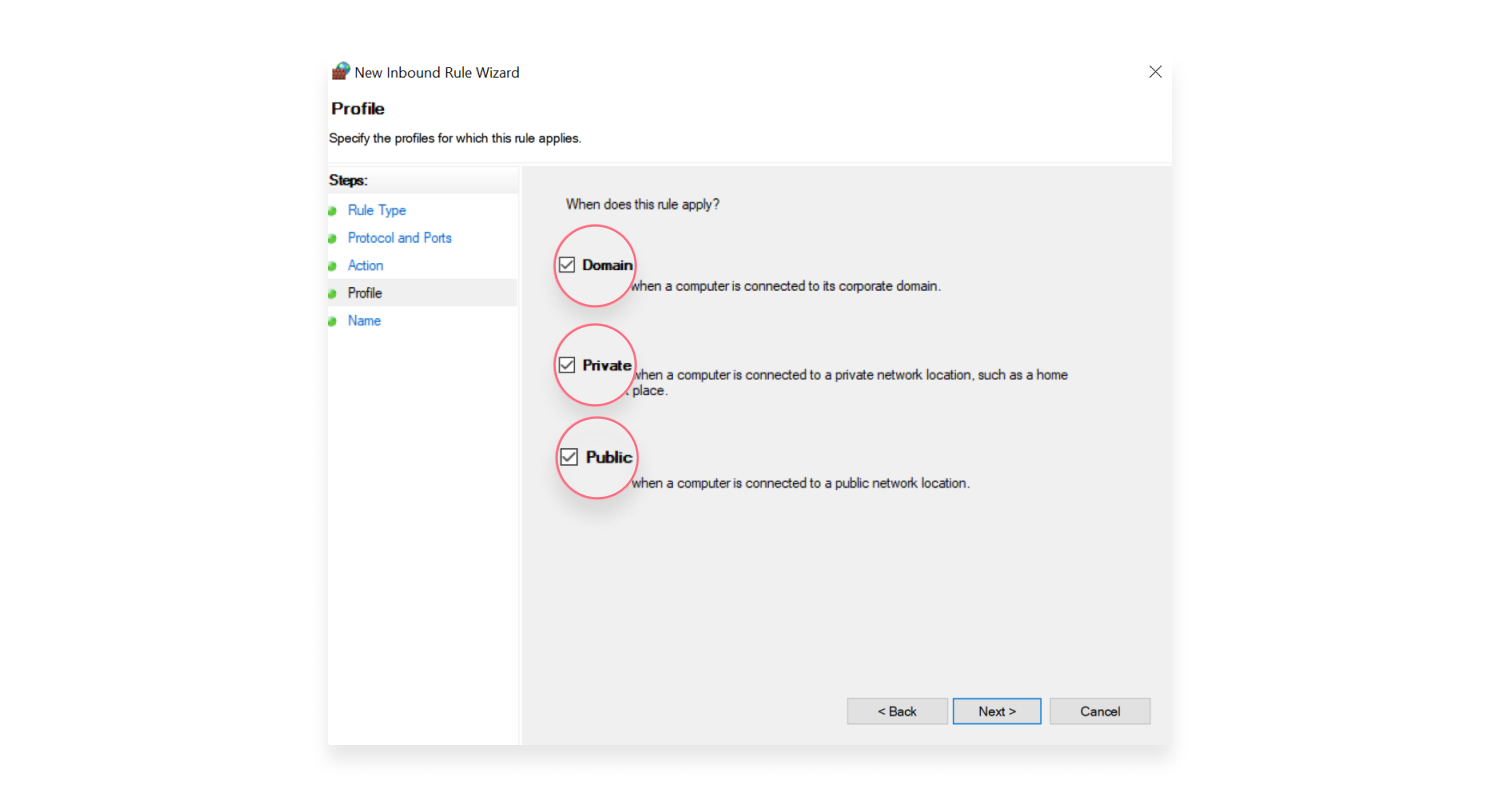
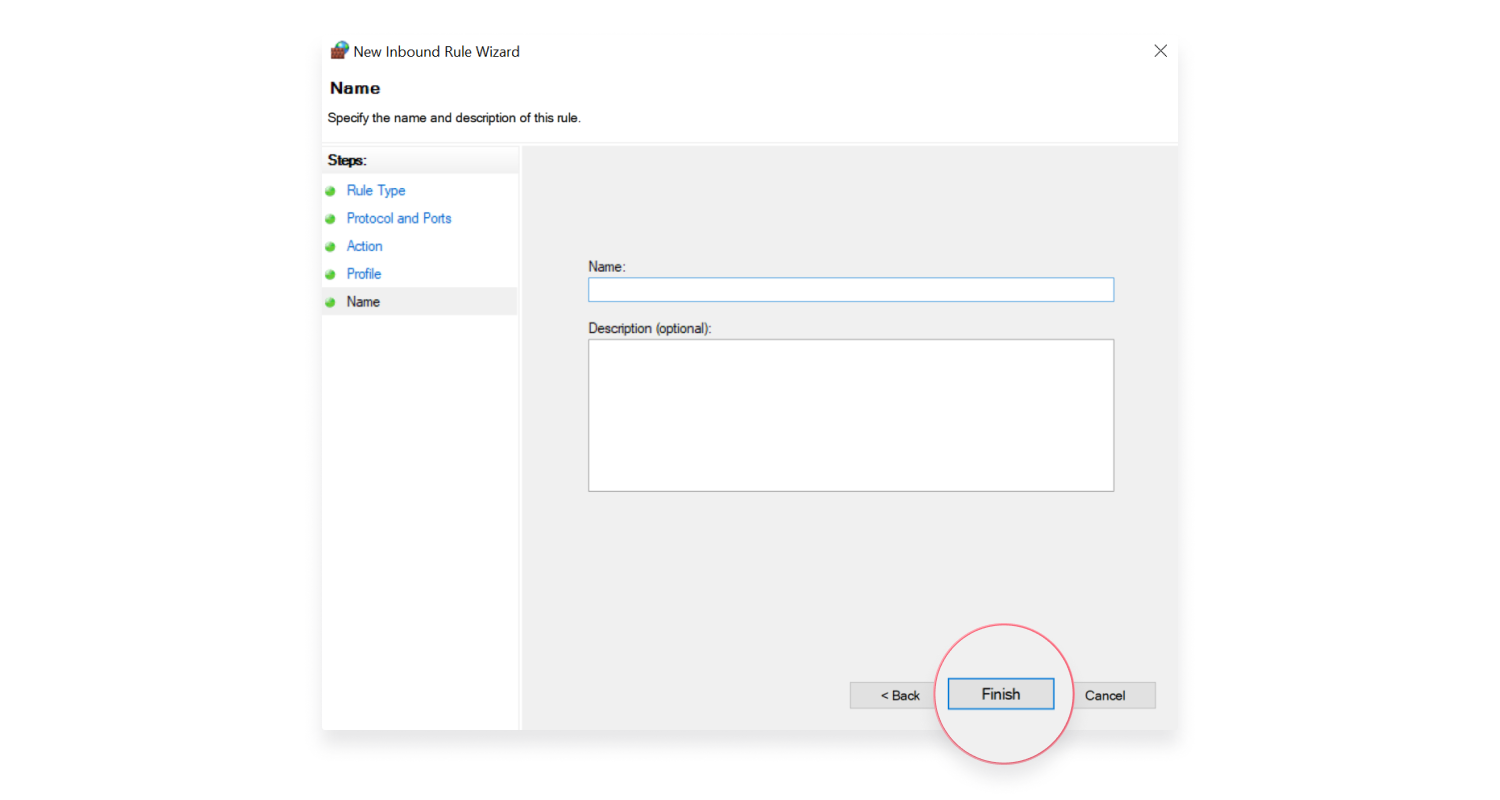
To shut the port, but remove the rule.
How to open a port on Mac
It is very easy to open a port on Mac. Hither's how:
- Open Organization Preferences.
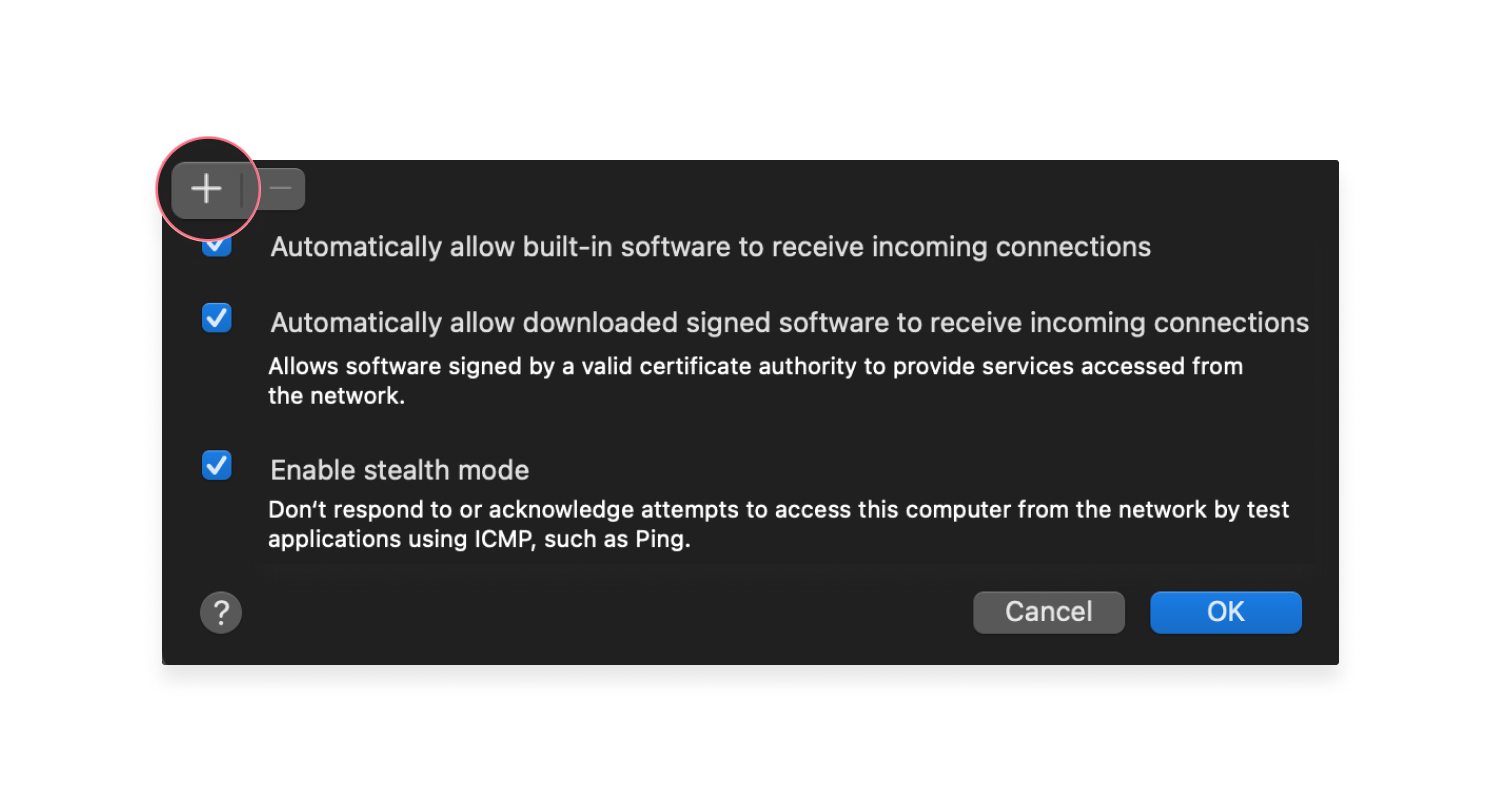
- Go to Security and Privacy > Firewall > Firewall Options.
- Tap plus sign.
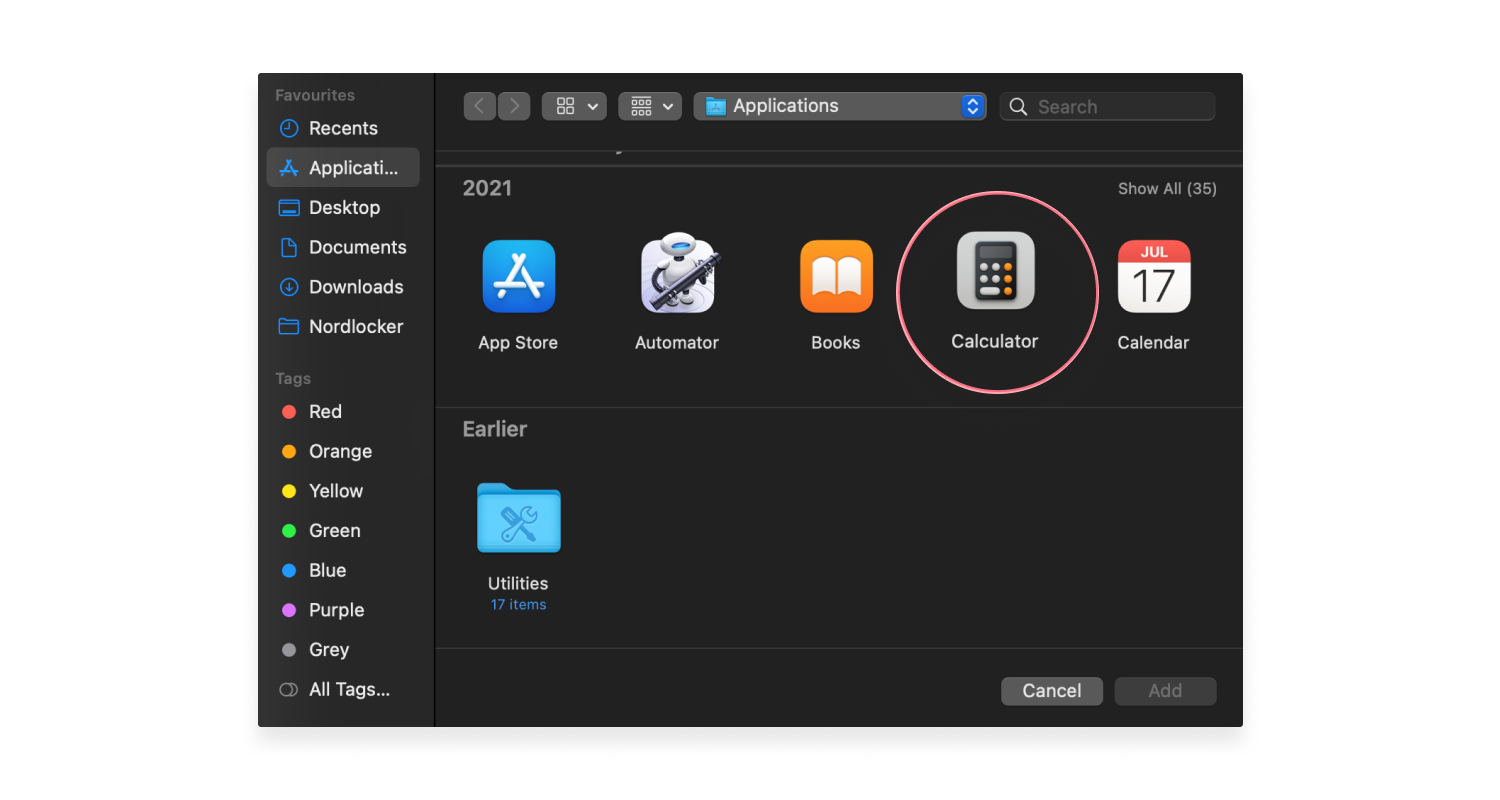
- Choose an application and click Add together.
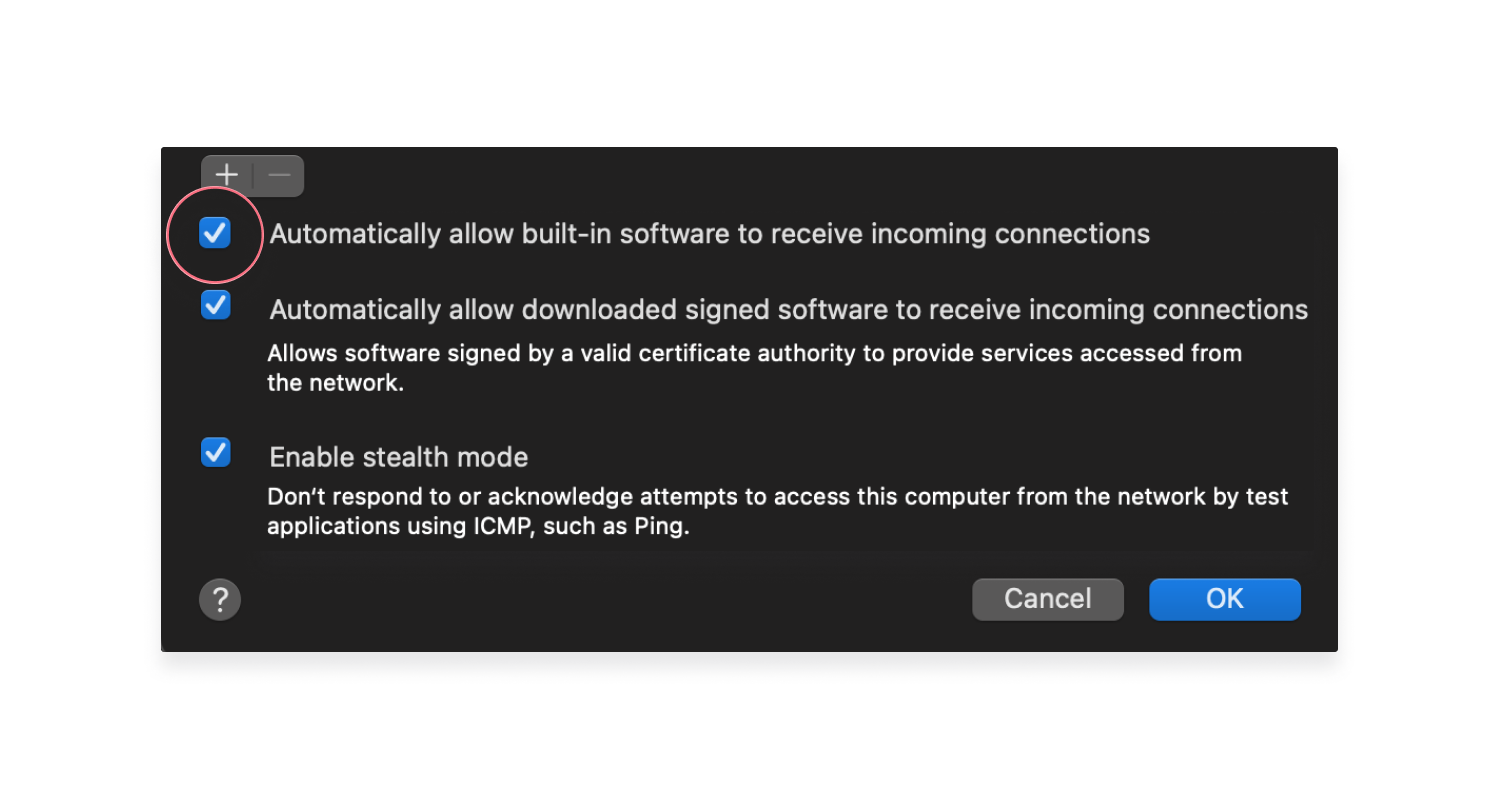
- Make sure that Permit Incoming Connections is turned on.
- Click OK.
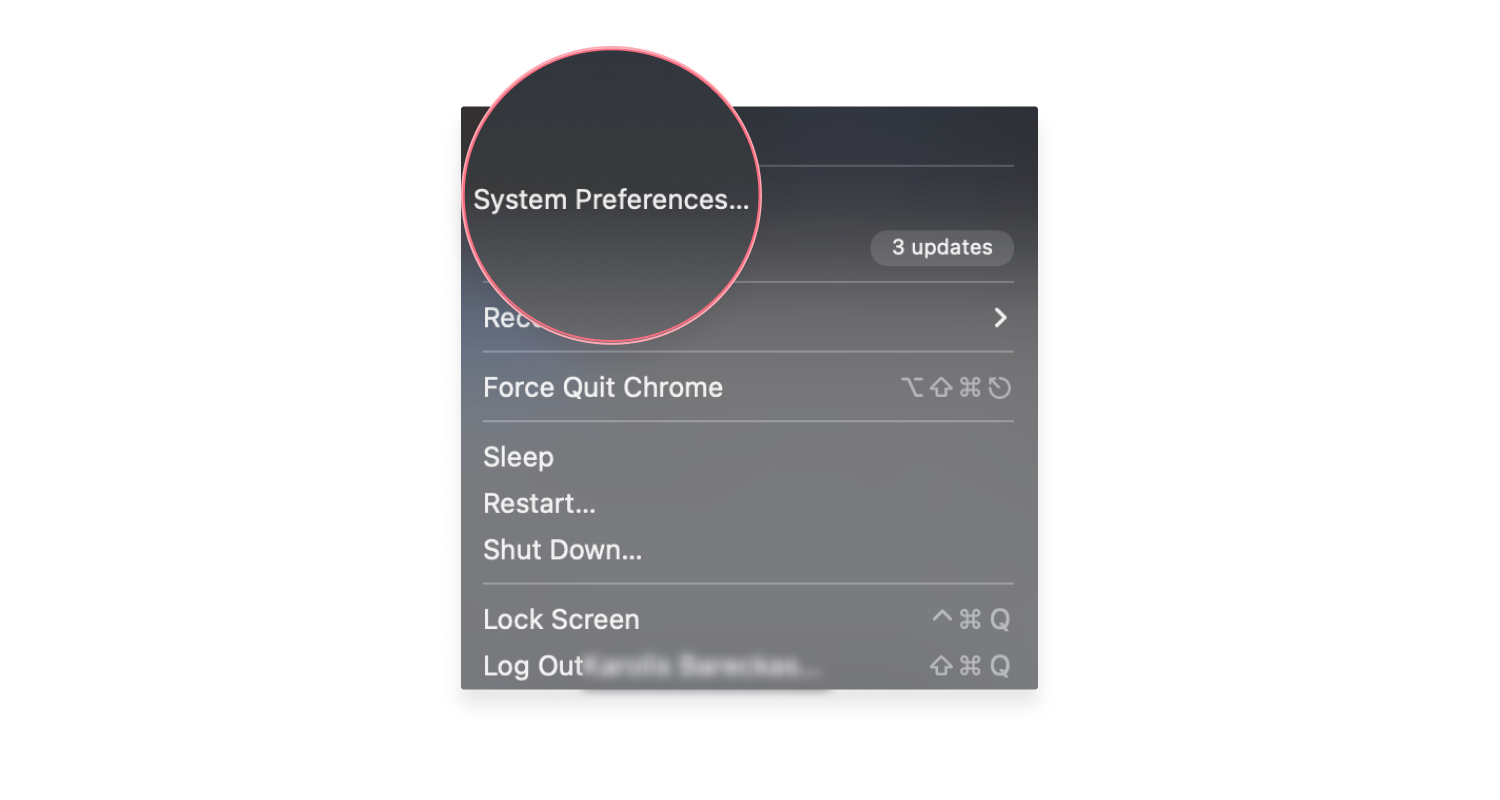
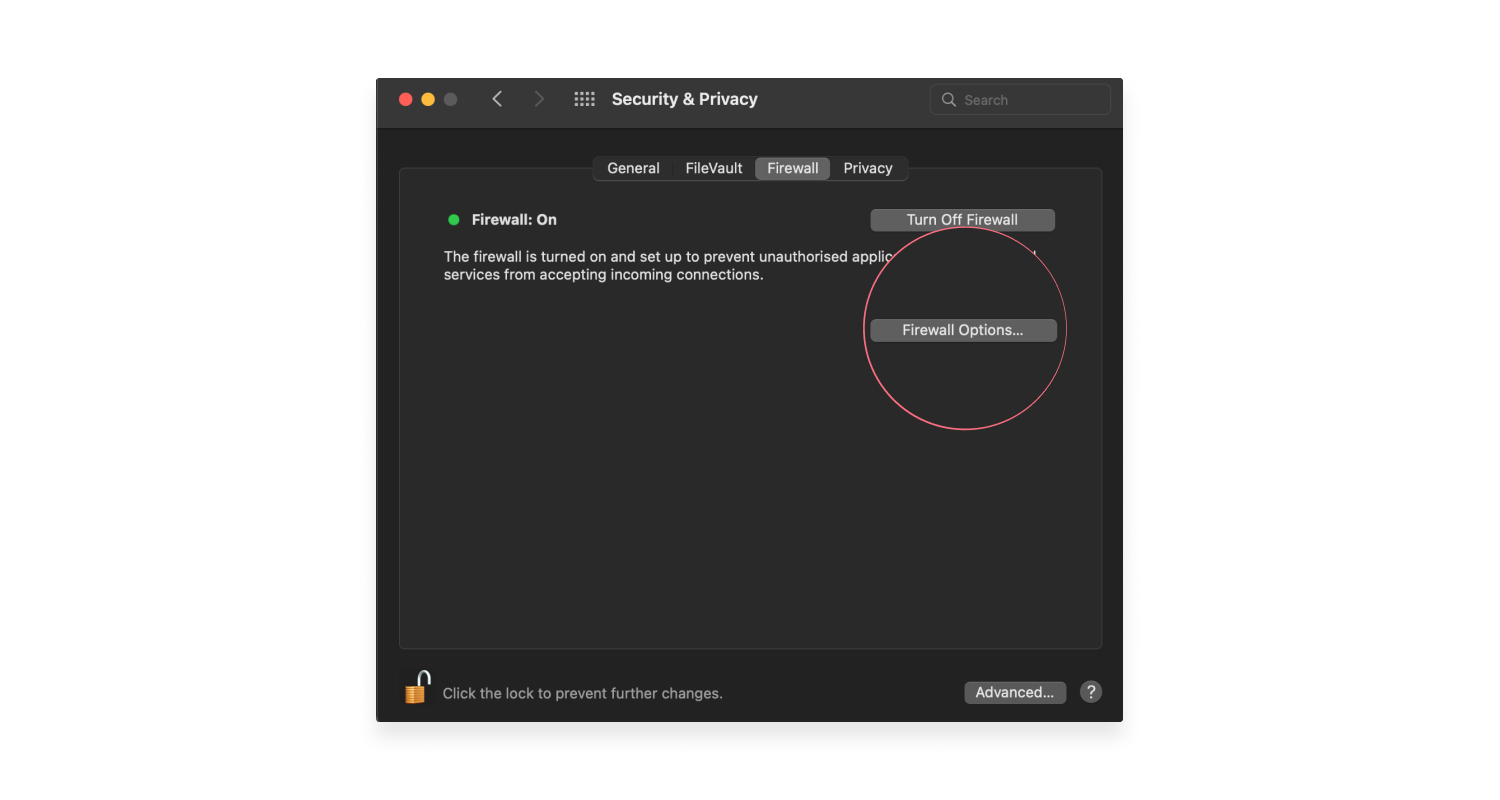
To close the port, simply remove it from the list.
Common port numbers
| Port number | Description |
|---|---|
| 20 | FTP (File Transfer Protocol) data transfer |
| 21 | FTP (File Transfer Protocol) command command |
| 22 | SSH (Secure Shell) |
| 23 | Telnet |
| 25 | SMTP (Simple Mail Transfer Protocol) |
| 53 | DNS (Domain Name System) |
| 67, 68 | DHCP (Dynamic Host Configuration Protocol) |
| 80 | HTTP (Hypertext Transfer Protocol) |
| 110 | POP3 (Postal service Office Protocol) |
| 119 | NNTP (Network News Transfer Protocol) |
| 123 | NTP (Network Time Protocol) |
| 143 | IMAP (Internet Message Access Protocol) |
| 161 | SNMP (Unproblematic Network Management Protocol) |
| 194 | IRC (Cyberspace Relay Chat) |
| 443 | HTTPS (Hypertext Transfer Protocol Secure) |
| 546, 547 | DHCPv6 (Dynamic Host Configuration Protocol version 6) |
Want to find out more?
Check out to NordVPN on Youtube

Paul Black  Verified writer
Paul is a engineering and art enthusiast who is always eager to explore the most upwards-to-engagement issues in cybersec and internet freedom. He is always in search for new and unexplored angles to share with his readers.
Source: https://nordvpn.com/blog/what-is-my-port/


0 Komentar